
Many people live with symptoms for years because the signs can look like “normal tiredness”. Testing turns vague symptoms into clear answers and a practical plan.
What is sleep apnoea, and why is it risky long term?
If you’re considering a sleep apnea test Melbourne providers offer, it’s important to understand what the condition involves. Sleep apnoea is a disorder where breathing repeatedly pauses or becomes very shallow during sleep. These interruptions lower oxygen levels and fragment sleep, placing ongoing stress on the heart, brain, and metabolism.
Over time, untreated sleep apnoea—often identified through a sleep apnea test in Melbourne—is associated with higher risks of high blood pressure, heart disease, stroke, type 2 diabetes, and mood or memory problems. The risk increases because the body is repeatedly pushed into a stress response throughout the night.
Who should consider a sleep apnoea test in Melbourne?
They should consider testing if they snore loudly, wake unrefreshed, or feel sleepy during the day despite “enough” hours in bed. Many people also notice morning headaches, dry mouth, irritability, poor focus, or waking up gasping.
It is especially relevant if they have high blood pressure, atrial fibrillation, type 2 diabetes, reflux, or weight gain that feels hard to shift. Even without classic snoring, persistent fatigue and poor-quality sleep are enough reason to investigate.
How does a sleep apnoea test work?
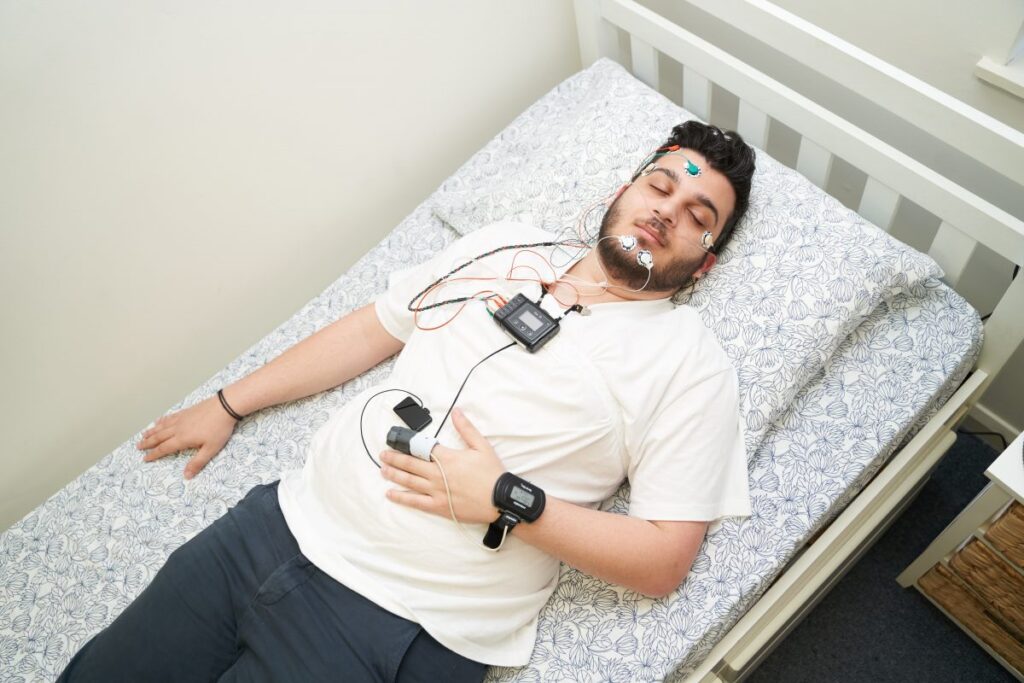
A sleep apnoea test measures breathing, oxygen levels, and sleep-related patterns to see whether apnoeas or hypopnoeas occur. The goal is to quantify events and determine severity, not just confirm that snoring exists.
Most tests use sensors to track airflow, chest effort, oxygen saturation, and heart rate. The resulting report typically includes an index showing how often breathing disturbances occur per hour, which guides treatment decisions.
What is the difference between a home sleep test and an in-lab study?
A home sleep test is usually simpler and focuses on breathing and oxygen-related signals. It can be convenient, lower cost, and closer to a person’s normal sleep environment.
An in-lab study records more data, often including brain waves and leg movement, and can assess a wider range of sleep disorders. If symptoms are complex, if home results are unclear, or if other conditions are suspected, an in-lab study may be recommended.
How can testing prevent heart and blood pressure complications?
Testing helps because treatment can reduce nightly oxygen drops and stress surges that drive blood pressure up. When sleep apnoea is managed, many people see improved blood pressure control and reduced cardiovascular strain. Read more about heart and cardiovascular conditions.
For those already on medication, identifying sleep apnoea can explain why blood pressure remains stubborn. Addressing the sleep component can be a missing piece in a broader heart-health plan guided by their clinician.
How does diagnosing sleep apnoea help reduce stroke and arrhythmia risk?
Sleep apnoea is associated with irregular heart rhythms, including atrial fibrillation, and with increased stroke risk. A diagnosis allows targeted treatment that stabilises oxygen levels and reduces the repeated “fight-or-flight” spikes that can affect blood vessels and heart rhythm.
It also gives their healthcare team clearer context for managing other risk factors. Rather than treating symptoms in isolation, they can address a driver that may be worsening vascular and rhythm stability over time.
How can a sleep apnoea test support metabolic health and diabetes prevention?
Poor sleep and low oxygen can affect insulin sensitivity and appetite regulation. Testing identifies whether sleep apnoea may be contributing to weight gain, cravings, or worsening blood sugar control.
When sleep apnoea is treated, some people find it easier to sustain lifestyle changes because energy and focus improve. It does not replace diet and activity, but it can remove a major barrier that makes healthy routines feel unusually difficult.
What changes after a positive sleep apnoea result?
A positive result usually leads to a treatment discussion based on severity, symptoms, and personal preferences. Many people start with CPAP therapy, which keeps the airway open and can improve sleep quality quickly when used consistently.
Other options may include a mandibular advancement device (oral appliance), positional therapy, weight management support, and addressing nasal obstruction. Their clinician may also review alcohol intake, sedative use, and sleep habits, as these can worsen airway collapse.
What happens if the test is negative but symptoms continue?
A negative result does not always mean “nothing is wrong”. It may mean sleep apnoea is unlikely or that another sleep issue is causing symptoms, such as insomnia, restless legs, circadian rhythm disruption, or insufficient sleep.
If they still feel unwell, follow-up matters. Their clinician may recommend an in-lab study, repeat testing, or a broader evaluation to find the real cause rather than accepting ongoing fatigue as normal.
How should they prepare for a sleep apnoea test in Melbourne?
They should follow the instructions provided with the test, especially regarding sensor placement and sleep timing. Keeping the day and evening routine as normal as possible often gives the most representative result.
They may also benefit from noting symptoms beforehand, such as typical bedtime, wake time, alcohol use, and any witnessed breathing pauses. The more accurate the background information, the easier it is for clinicians to interpret results and tailor treatment.
When should they act, and what is the simplest next step?
They should act sooner rather than waiting for symptoms to “get bad enough”, because long-term risks build quietly. If they suspect sleep apnoea, the simplest next step is to speak with a GP or a sleep health provider about the most appropriate test type.
Testing is not just about confirming a diagnosis. It is a practical way to reduce preventable long-term health risks, improve daily functioning, and restore sleep to what it should be: genuinely restorative.
More to Read : Sleep Apnea Test Hobart: Early Diagnosis Matters
FAQs (Frequently Asked Questions)
What is sleep apnoea and why is it important to get tested in Melbourne?
Sleep apnoea is a condition where breathing repeatedly pauses or becomes very shallow during sleep, reducing oxygen levels and fragmenting sleep. Testing in Melbourne helps identify these disruptions early, preventing serious long-term health problems like high blood pressure, heart disease, stroke, type 2 diabetes, and cognitive issues.
Who should consider undergoing a sleep apnoea test in Melbourne?
Individuals who snore loudly, wake up feeling unrefreshed, or experience daytime sleepiness despite sufficient sleep should consider testing. Other signs include morning headaches, dry mouth, irritability, poor focus, or waking up gasping. Those with high blood pressure, atrial fibrillation, type 2 diabetes, reflux, or unexplained weight gain are also advised to get tested.
How does a sleep apnoea test work and what does it measure?
A sleep apnoea test measures breathing patterns, oxygen levels, chest effort, and heart rate during sleep to detect apnoeas or hypopnoeas. It quantifies the frequency of breathing disturbances per hour to determine severity and guide treatment decisions rather than just confirming snoring.
What are the differences between home sleep tests and in-lab sleep studies in Melbourne?
Home sleep tests are simpler and focus mainly on breathing and oxygen-related signals; they offer convenience and lower cost. In contrast, in-lab studies record additional data such as brain waves and leg movements to assess a wider range of sleep disorders. In-lab studies are recommended for complex symptoms or unclear home test results.
How can diagnosing and treating sleep apnoea help improve heart health?
Treating sleep apnoea reduces nightly oxygen drops and stress responses that elevate blood pressure and strain the cardiovascular system. Proper management often leads to better blood pressure control and lowers risks of irregular heart rhythms like atrial fibrillation and stroke by stabilising oxygen levels overnight.
What should I do if my sleep apnoea test result is negative but symptoms persist?
A negative test doesn’t always mean no issue; other conditions like insomnia or restless legs may be causing symptoms. It’s important to follow up with your clinician who may recommend further evaluation such as an in-lab study or repeat testing to identify the real cause rather than accepting ongoing fatigue as normal.

Leave a Reply